A lot of the early money in gig work is not really profit.
It is reinvestment.
That sounds absurd at first, but hear me out.
To make money doing certain kinds of work, you have to own, borrow, rent, or otherwise have access to the things that make the job possible. In rideshare, that means the car, insurance, maintenance, fuel, phone mounts, chargers, cleaning supplies, and everything else that keeps the vehicle ready to work.
For event work, it gets even more obvious.
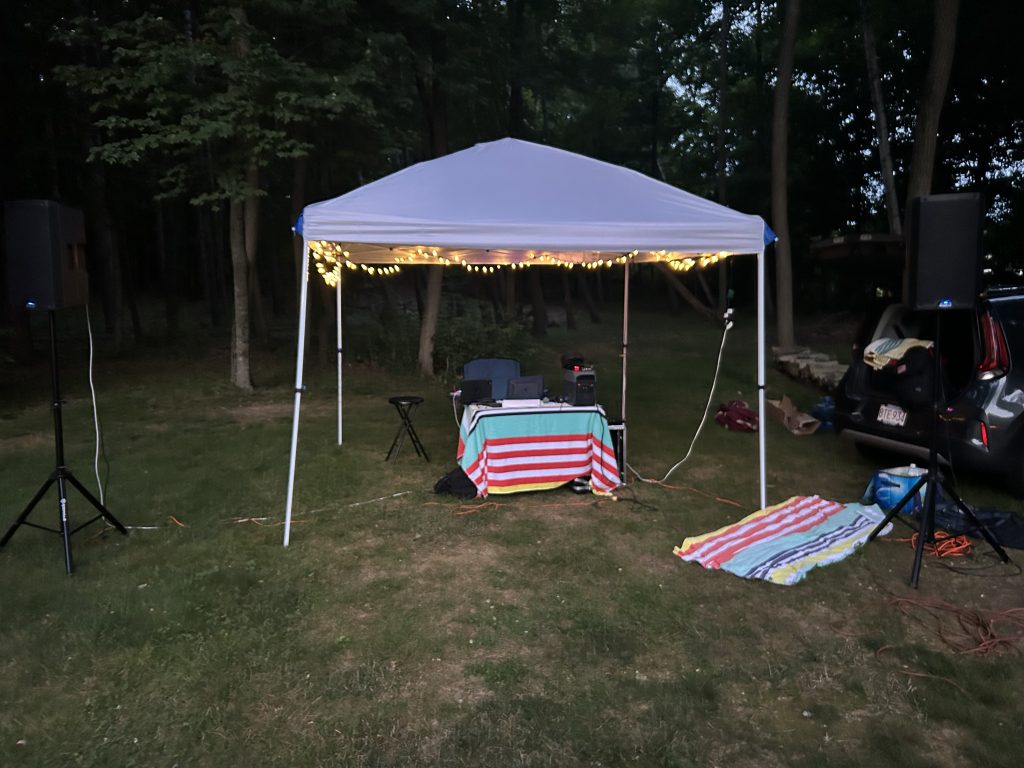
I have well over two grand invested just in equipment used to produce sound. That is before getting into the smaller pieces that make an event actually function: a $100 10-by-10 canopy, a $30 folding chair, a $20 folding table, another $10 or $20 for a stool or spare chair, stands, cables, towels, power strips, bags, cases, lighting, and all the other pieces that do not look like much until you need them and do not have them.
That is the reality of this kind of work.
You have to have the equipment. You have to transport it. You have to know what it does. You have to know when to bring it. You have to know when not to bring it. And after the event, you have to store it.
That last part matters more than people think.
Owning gear means you are not renting it every time. That can save money over the long run. But owning gear also means you need space for it. You need to organize it. You need to keep it from getting damaged. You need to separate the required gear from the extra gear. You need to avoid turning every event into a full house move because you packed everything you own “just in case.”
That becomes the real game.
Do I buy this?
Do I rent this?
Do I borrow this?
Do I skip it because I do not actually need it?
Renting is not a bad idea. Sometimes renting is the smarter move. If you only need a piece of equipment once or twice a year, owning it may not make sense. If it is expensive, heavy, hard to store, or only useful for a very specific kind of job, renting can be the better business decision.
But once you own something useful, you are not renting it again.
That is where reinvestment starts to matter.
A canopy bought for one outdoor event can become shade, weather protection, a production booth, a visual boundary, or a cleaner work area at future events. A folding table becomes part of the standard setup. A chair with cup holders is not just a chair; it keeps drinks away from electronics. Extra stands and cables are not exciting, but they can save a job when the venue layout is not what you expected.
But this is not just reinvestment.
It is also recoup.
That is the second part people miss. Once the money has already been spent, every job has to help recover the cost of what you bought to make the job possible in the first place.
When someone sees a $300 event, they may think that is just money going into your pocket. But if you already have over two grand invested in sound equipment, plus the canopy, table, chairs, stands, cables, power, bags, cases, and support gear, that $300 is not only pay for one night.
It is part of getting your money back out of the equipment.
Every gig should move the equipment closer to paying for itself. That does not mean every event has to pay off the whole setup by itself. That would be unrealistic. But the work has to contribute to the larger system. Otherwise, the gear is not working equipment. It is just expensive stuff taking up space.
That is why pricing matters.
You are not only charging for the hours people see. You are charging for the gear that is already there, the knowledge of how to use it, the transportation, the setup, the teardown, the risk, the wear on the equipment, and the ability to solve problems when the setup does not go exactly as planned.
A $300 gig can help.
But it is not just income.
It is recoup.
It is part of getting back the money already put into the system.
That is also why some of the best customers for entertainment work are people in the trades.
Construction workers, plumbers, electricians, carpenters, mechanics, and other tool-based workers usually understand the cost of showing up prepared. They know what it means to buy equipment, maintain it, transport it, store it, and replace it when it wears out. They understand that the price is not only for the hour someone is standing there doing the visible part of the job.
They may still haggle.
That is normal.
But a lot of them understand the math better than people who have never had to buy the tools that make their own income possible. They know that a lower price does not make the equipment cheaper. It does not make the travel free. It does not make setup and teardown disappear. It does not make experience less valuable.
That is why they can sometimes be better customers and better tippers.
They understand that when someone gives a price, that price is not just pulled out of thin air. It is built from time, tools, transportation, setup, risk, experience, and the need to eventually recoup what has already been invested.
That is the part of gig work people do not always see.
Not every gig is just money taken home. Sometimes a gig becomes equipment. Sometimes it becomes a future booking. Sometimes it becomes a better setup. Sometimes it becomes proof that you can handle more next time.
The trick is knowing the difference between spending money and building infrastructure.
Useful reinvestment makes the next job easier, safer, cleaner, faster, or more professional. Random gear just takes up space and makes loading the car worse.
So yes, a gig may pay a certain amount on paper.
But the real question is what that money does.
Does it cover the time?
Does it cover the risk?
Does it help recover what was already spent?
Does it build the ability to take the next job?
That is the math.
Reinvestment gets you into the work.
Recoup keeps the work from becoming an expensive hobby.
And the customers who understand tools usually understand that better than anyone.