
Now we’re getting into the part everybody wants to hear about.
Royalties.
This is one of those areas where you have to be very mindful because every industry handles royalties a little differently.
Books.
Music.
Film.
Television.
Merchandise.
Licensing.
They all have different customs, different accounting methods, and different contracts.
That’s why you should never assume that because you understand royalties in one business, you understand them in another.
Now let’s talk about one of the biggest things that catches people off guard.
The advance.
If you’re an established writer, publisher, musician, or creator with a proven history, companies will often pay you an advance.
Sometimes that’s because they know you’ll complete the work.
Sometimes they’ll pay an advance on work that’s already substantially finished because they’re buying the right to publish or distribute it.
An advance can be a wonderful thing.
But remember what it actually is.
You’re taking money today against future sales.
That’s an important distinction.
Now this is where different industries start behaving very differently.
In publishing, an advance may simply be an advance against future royalties.
In other industries—especially music—production costs have often been charged against that advance.
Recording.
Studio time.
Producers.
Engineers.
Marketing.
Photography.
Videos.
Promotion.
Depending on the agreement, those expenses may be recouped before you ever receive additional royalty payments.
So you may receive what feels like a very large check…
…and then discover you don’t receive another royalty payment for a very long time because the advance and other recoupable costs are being earned back first.
Now add today’s streaming environment into the equation.
Revenue is often spread across millions of streams rather than physical album sales.
That changes the economics dramatically.
This is also where people begin hearing about something called a 360 deal.
A 360 deal is designed so that the company shares in multiple revenue streams, not just record sales.
Depending on the agreement, that can include things like:
- Touring
- Merchandise
- Sponsorships
- Licensing
- Brand partnerships
- Acting opportunities
- Other entertainment income
The idea is simple.
If they’re investing heavily in building your career, they may negotiate to participate in multiple sources of revenue.
Whether that’s a good deal depends entirely on the specific contract, your leverage, and what you’re receiving in return.
For a brand-new artist with little negotiating power, these agreements can become extremely difficult if they aren’t fully understood.
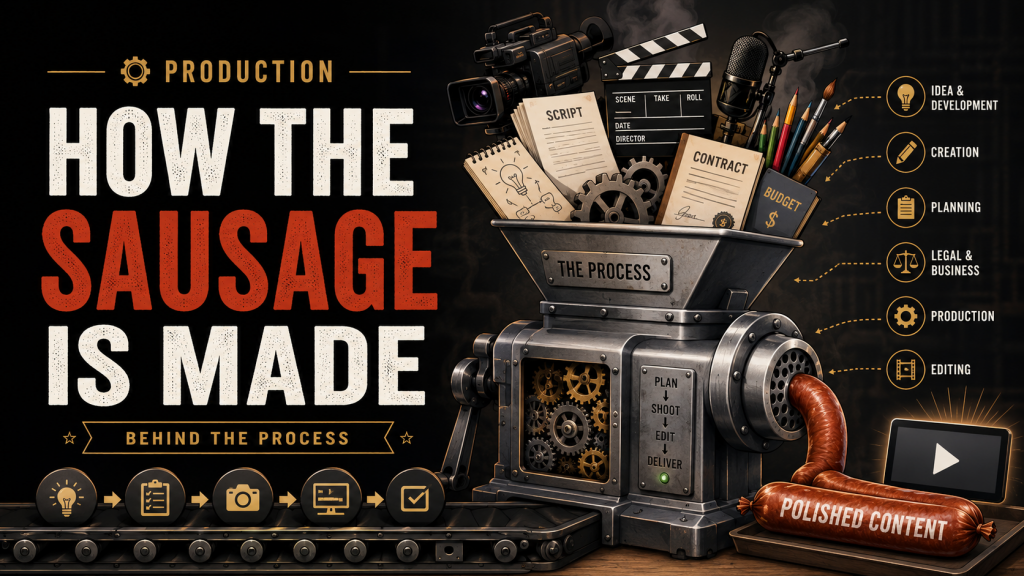
These machines love it when a young artist signs a contract they don’t fully understand.
A little tweak here.
A little adjustment there.
Suddenly every dollar that comes in is being used to repay advances, production costs, marketing expenses, or other obligations before the artist ever sees meaningful money.
Meanwhile, the artist may be touring, selling merchandise, signing endorsement deals, or appearing in movies, and portions of those revenues may also be covered by the agreement.
You could be working constantly and still wondering why you’re not getting paid the way you expected.
That’s why you need professionals on your side.
A lawyer who understands entertainment contracts.
A CPA who understands taxes and royalty accounting.
Because that big advance check?
The tax system still recognizes it as income.
You’re responsible for planning for those taxes.
Then there’s another responsibility.
Delivery.
If you’ve accepted an advance for work that hasn’t been completed…
You now have an obligation to deliver.
That’s part of the bargain.
Exactly what satisfies that obligation depends on the agreement.
That’s another reason why every definition inside the contract matters.
Now let’s get to one of the biggest issues of all.
Accounting.
If you’re getting paid on units sold…
Then you need confidence that the numbers you’re receiving are accurate.
That’s where audit rights become incredibly important.
One well-known example is the disputes surrounding Meat Loaf’s Bat Out of Hell royalties.
The album became one of the best-selling albums of all time, yet there were long-running disagreements over royalty accounting that eventually led to litigation and settlement.
The lesson isn’t about one artist.
It’s about the principle.
If you don’t have the ability to verify the numbers…
Then you’re depending entirely on someone else’s accounting.
Good contracts don’t just tell you how you’ll be paid.
They also establish how payments are calculated, what records are maintained, and under what circumstances those records can be independently reviewed.
Trust is important.
Verification is better.
That’s why good contracts don’t rely on hope.
They rely on structure.
Royalties can create long-term wealth.
But only if:
- You understand how they’re calculated.
- You understand how advances are recouped.
- You understand what expenses can be deducted.
- You understand your delivery obligations.
- You understand your audit rights.
- And you have qualified professionals reviewing everything before you sign.
Because in the end…
It’s not enough to create something valuable.
You have to make sure you’re actually getting paid for it.
You still got to hand it to the judge… and actually say it isn’t funny.