
The Cost of Publication and Other Tricks of the Trade for Keeping the Footprint Small While Keeping Readers Engaged
So, folks, this article is about what you are seeing on the site now—and the sudden realization that there appears to be a picture attached to every article.
Yes, there is.
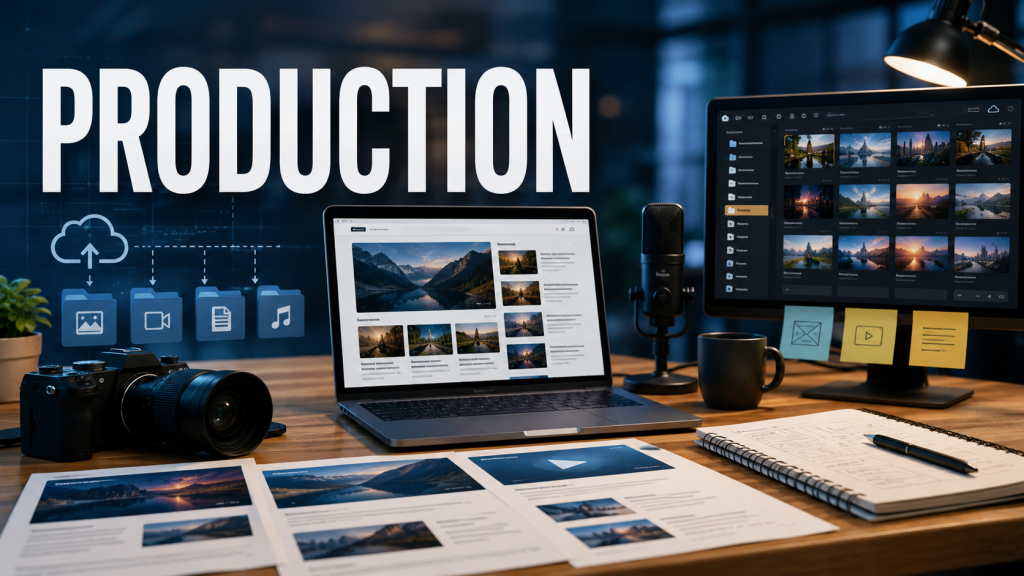
But what you are seeing is not a completely original image being produced for every individual post. It is a rotating collection of banners designed to create separation between articles, identify the type of content being presented, and give the reader something visual that draws attention to the next piece.
It keeps the site looking consistent without making every page look identical.
That distinction matters when you are producing your own website, because eventually you have to ask a practical question: Do I really want to create, export, upload, and permanently store a new thumbnail or banner every single time I publish an article?
Every website has limits.
People tend to think of digital space as infinite because a webpage can continue scrolling. Unlike a newspaper, magazine, or printed book, there is no immediately visible edge of the page. You do not reach the bottom of a sheet of paper and have to decide what gets cut.
But the limits are still there. They are simply measured differently.
A printed publication is limited by paper size, page count, ink, weight, and printing costs. A digital publication is limited by storage, bandwidth, processing, loading speed, backup size, and the service tier being rented from the hosting company.
Text takes up very little space in comparison with photographs, audio, and video. You can publish a substantial number of text articles before the writing itself becomes a serious storage concern. Media is what begins consuming the available space.
A single photograph may not seem significant. Neither will the next one. But then there are several exported sizes, alternate versions, duplicates, thumbnails, backups, and abandoned drafts. Over time, the collection grows—not because any one file is enormous, but because every publication decision adds another permanent object to the server.
That is where restraint becomes part of production.
The rotating-banner system allows the site to have a visual identity without requiring a unique asset for every article. Several banners can be created for each category and rotated as new pieces are published. The reader sees something familiar but not completely repetitive.
The banner signals that there is a new article to consider. It gives the page structure and helps distinguish one entry from the next. At the same time, the website avoids accumulating hundreds of nearly identical files whose only purpose was to accompany one post on one particular day.
This is not cutting corners. It is building a reusable production system.
The same principle explains why video and livestreams are usually hosted elsewhere. A standard website-hosting package is not designed to distribute a live broadcast to many viewers or repeatedly serve large video files. That requires storage, transcoding, bandwidth, and distribution infrastructure that ordinary web hosting does not provide.
That is why platforms exist.
The video can live on YouTube, Rumble, or another service built to distribute it, while the website provides the article, context, archive, category structure, and permanent location where everything connects.
The website remains the home of the project, even when every piece of media is not physically stored on its server.
Dedicated pages can collect those videos, livestreams, and outside platform links so the reader does not have to search across several services to understand the larger body of work. The platform handles distribution. The website handles organization, presentation, and ownership of the overall structure.
That is one of the tricks of the trade: understand what each service is built to do, and avoid forcing one piece of infrastructure to perform every job.
The objective is not to make the smallest website possible. It is to maintain a small and manageable footprint while keeping the experience engaging for the average reader.
That means using visual material with intention. It means rotating assets instead of constantly replacing them. It means embedding large media rather than unnecessarily hosting it. It means using text—which remains inexpensive, searchable, and durable—as the foundation of the publication.
So, yes, there are more pictures on the site now.
But behind that visual change is a controlled production method: a reusable library, clear category identities, external media distribution, and enough variation to keep the site from appearing static.
Digital space may feel infinite when you are scrolling through it.
The invoice—and the server—know otherwise.